

Cleaning floors can be a chore. Keep your hard surfaces in tip, top shape with this guide to natural floor cleaning and homemade floor cleaner recipe.
 This post uses affiliate links. They don’t cost you a thing and help us bring you all natural cleaning tutorials. Read more in Policies & Disclosures.
I was barefoot in the kitchen chopping vegetables when I stepped in on a sticky spot on the floor. Where do these mystery spots come from?
Was it a bit of watermelon eaten as my kids gallop across the kitchen, a splatter from the stove, or something the dog tracked in from outside?
The source of the spot may be a mystery, but the way to clean it is not -> grab a microfiber mop, spray on some homemade floor cleaner, and wipe it away.
Learning to Clean Floors Naturally
We’ve lived in 8 different homes so I’ve dealt with a lot of different hard floor coverings – linoleum, laminate, hardwood, engineered wood, ceramic tile, natural stone, and even sealed cement – I’ve cleaned them all!
This guide will help you keep hard surface floors in tip, top shape…. naturally!
Homemade Floor Cleaner Ingredients
Look online and you will find a million different recipes for homemade floor cleaners. How can you choose?
I want floor cleaner to:
- Do great job cleaning
- Leave no streaks or residue.
- Work on many different flooring types.
- Be safe to use around kids and pets.
What Not To Use
There are several common floor cleaning ingredients I do not use:
- Borax – Borax is a naturally occurring mineral, but it is toxic to the respiratory system and should not be ingested. In addition, Borax scores an F on the EWG scale for respiratory effects and developmental toxicity.
- Baking Soda – Baking soda can leave grit or a film on hard floors. Combing baking soda with vinegar in a cleaner neutralizes both, leaving water and salt. (Learn more in Green Cleaning Ingredients You Should Never Mix.)
- Castile Soap – Castile soap is one of my favorite all-natural cleaners, just not for floors. It needs a rinse and/or thorough drying to prevent residue and maximize shininess…. and drying floors does not sound fun!
- Rubbing Alcohol – Rubbing alcohol contains isopropyl alcohol plus water, denaturants, and artificial fragrance. The denaturants and artificial fragrance are poisonous and should only be used in well-ventilated areas.
What Could Be Used
- Vinegar – Vinegar falls into the MAYBE category. It is cheap, environmentally safe, and effective on dirt but it should not be used on all floor types. The acetic acid can etch natural stone and will damage waxed floors. Some engineered floor and hardwood floors manufacturers also caution that frequent vinegar use can soften or cloud the finish. I use it occasionally when naturally restoring hardwood floors, but I like using a multi-purpose cleaner for general floor cleaning.
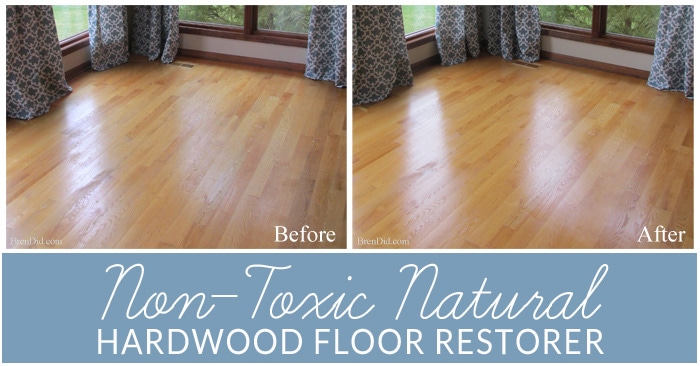
What to Use
- Water –Water is nature’s best floor cleaning product. Many times water is all you need to remove dust and everyday build up from floors. Remember, too much water can cause damage to any floor and water should never be used on unfinished hardwood or waxed wood. Use distilled water to prevent mineral buildup from hard water.
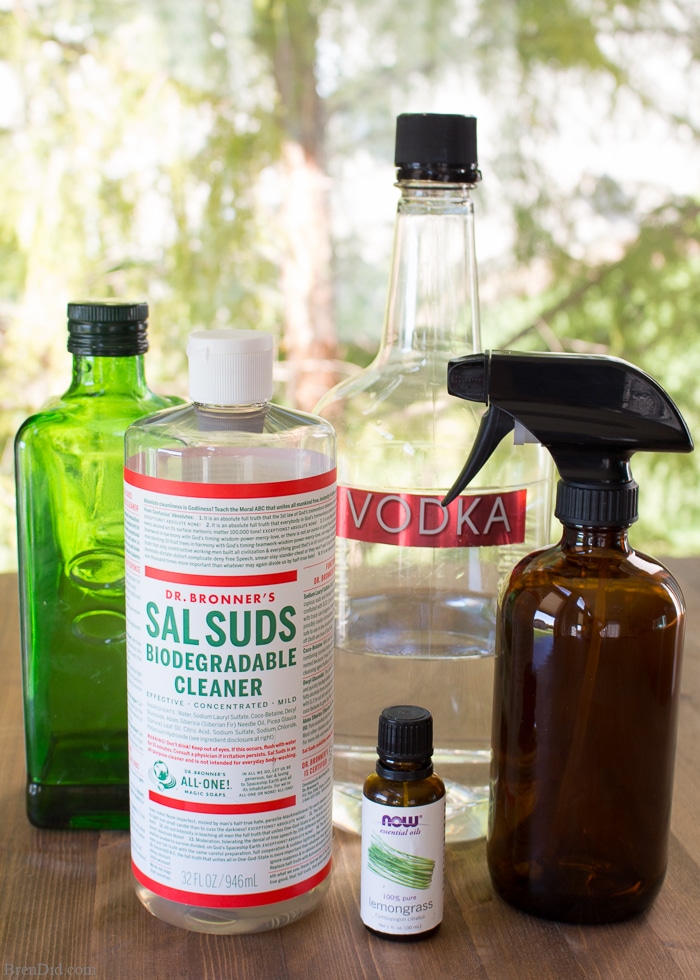
- Detergent – Some grime (like oil and grease) resists water and needs an additional cleanser. In no-rinse situations like floor cleaning a mild natural detergent is a dirt fighting must. It leaves less streaks than Castile soap and does not need a rinse to shine. Look for a natural, non-toxic detergent like Sal’s Suds.
- Vodka – Vodka is high purity ethanol mixed with water, it’s ph is nearly neutral when mixed with water. Vodka is a good solvent that helps dissolve oil and grime. Vodka also dries odorless and streak free. (Make sure you buy cheap vodka for cleaning!)
All Natural Homemade Floor Cleaner
My favorite homemade floor cleaner uses water, vodka and Sal’s Suds. It is an effective cleaning solution that meets my non-toxic cleaning standards and can be used on almost any floor. The water loosens and wipes away dirt, Sal’s Suds boosts the grime-fighting power, and vodka leaves an odorless streak-free shine. I love being able to clean hardwood then laminate then tile without ever having to switch solutions.
Ingredients
1 cup distilled water
1 cup vodka
3-4 drops Sal’s Suds
Directions
Pour all ingredients into a spray bottle and swirl lightly to combine.
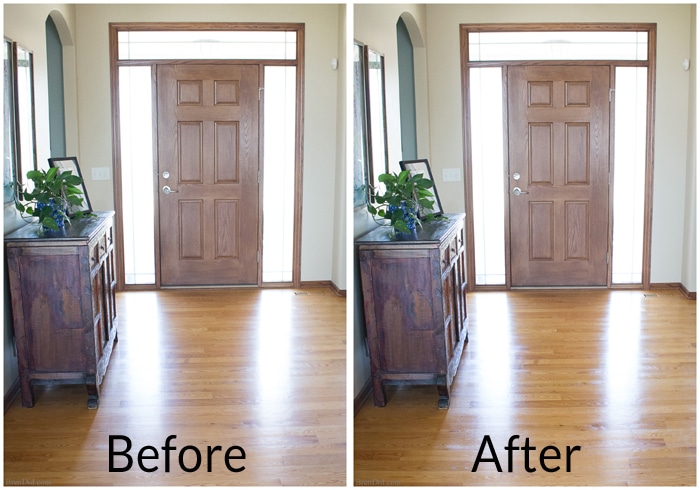
How to Clean Hard Surface Floors
- Sweep or vacuum to remove dirt and debris.
- Use a reusable dust attracting cloth to wipe floors of dust and hair (especially if you have pets or live in a dusty area).
- Spray a small area lightly with homemade floor cleaner and wipe clean with a microfiber mop. Continue in small sections until the floor is clean.
Floor Cleaning Tips
- Use a microfiber mop to clean hard floors. Traditional mops leave extra water on floors leading to streaks. Look for one with an attachable spray bottle and washable pads for easy cleaning.
- Mist floors with a spray bottle instead of using a bucket of solution. The extra liquid takes more time to mop up and can cause water damage.
- Enhance hardwood shine and color by making a spray of with 1 Tbsp olive oil, 1 cup vodka, and 10 drops of essential oil (I use lemongrass and lemon for scent). Shake frequently and spray lightly. Buff with a dry microfiber mop. Work in small sections.
- Keep floor in top shape with regular maintenance. A daily sweep and prompt wipe up of spills will keep floors looking great without much mopping.
I hope this homemade floor cleaner helps you keep your home spic and span naturally!

Sass
Floors look great in your before/after pics. Did you use the oil treatment recipe for extra shine in these pics? Or is this your results from just the cleaner recipe?
Bren
I used the oil treatment before the final pictures.
Rich
Hi Bren! Can I add the olive oil to the cleaner to give my floor a little shine?
Thankd
Bren
I have not tried adding oil to the cleaner, if you do I would spot test to see how well it works before doing the whole floor.
Kimberly Coughlin
Your floor cleaner is the best, no kidding. My kitchen and bathroom floors are linoleum and laminate everywhere else and were dull. Commercial products did nothing. They look new, shiny and are not slippery. Best tip ever. Thank you.
Francesca
This floor cleaner is fantastic! It’s also works great to clean stainless steel appliances.
Bette
This cleaner does a fantastic job cleaning floors, but more than that, since the day after I started using it, the little black beetle-type bugs that I used so see are gone! Or if I find one, it’s dead. If I go out of town or don’t get around to cleaning for a couple weeks, they begin to return. Is it the vodka or the Sal Suds that acts as a repellant???
Gerrie Boyle
Instead of Sals suds, could you use Blue Dawn?
Bren
Yes, however, I prefer Sal’s Suds or a more natural detergent.
Robin
Thank you so much for this recipe. I’ve tried several green cleaners for my new laminate flooring. This one hit it outta-the-park!
Bren
Thanks, Robin!
Tammy Kuppinger
Borate/borax is one of the only ingredients that kills mold and dust mites. Diluted down, don’t you think it would be good to add this to a floor cleaner?
Bren
I would not add Borax as it will leave a residue unless rinsed.
nicole
Hi Brenda, Thank you for the recipe. I’ve been using this for my floors, and I have a question…can this be stored under a cabinet for more than one use? Or will the ingredients not do well when kept? Also, I sort of combined your recipe with your floor shining recipe just added 1 tbl of olive oil to this cleaner recipe to do both a clean and a shine at the same time, and it seems to do well for my wood floors! They look shiny and get clean at the same time…it probably isn’t as effective of a shine but I wanted to take out the extra step of going back and having to shine the floors after I’ve cleaned them. 🙂
Bren
You can store for more than one use as written. I am not sure how combining the oils and storing long term would work. I’ve never tried using it the way you mention. Hope it works well for you! -Bren
Shelley
This floor cleaner changed my life. It’s amazing! Thanks for sharing.
Bren
Thanks, Shelley! I’m glad it’s working well for you!
Monique
You mention you had concrete floors in the past. I was wondering if this solution would work on my basement floors? I’m a little worried to use cleaners on it because we live in wet lands and the last thing I would want is to start flooding my basement. Thank you
Bren
For concrete floors I like to use my All-Purpose cleaner and a microfiber or cloth mop. Easy peasy!
Kari
Can a couple of drops of Dawn be substituted for sales suds.?
Bren
Yes, you can use any liquid dish detergent (the kind for hand washing dishes not dishwashers).
Janet
You mention you’ve had sealed concrete floors so I assume this cleaner is also suitable to use on concrete? I’ve read conflicting articles about using vinegar on the sealed surface but the vodka sounds safer as it is ph neutral.
Bren
Yes, I’ve used the solution (1 cup water, 1 cup vodka, 3-4 drops Sal’s Suds) on lots of different floors with great success. I would spot test your floors if you have concerns. Good luck!
Maria Cook
I have bamboo floor can I clean them with the same recipe for hard wood floor?
Bren
I would check your manufacturer’s guide or spot test.
Stephen Howard
Hi. Love your site.
What would you recommend to clean/mop tile floors?
Thanks
Bren
I use the water with a few drops of dish detergent. You can also use the vodka recipe above. For tile grout I use this mixture.
Deb
Is there a purpose to the essential oils other than fragrance and adding another oil to the olive oil? Lemongrass smells good to us, but cats have a far greater sense of smell, they live near the floor, and I’m not sure they will like fragrance. Unless it dissipates quickly. If there is a non-fragrant alternative to fragrant essential oils? Thank you for sharing all the great natural advice on your site!
Bren
Deb, the essential oils add some anti-bacterial properties to the floor cleaner but the cleaner will work just fine without any essential oils. With pets (especially cats) it’s best to limit their exposure to EOs. Good luck!
Liz
I can’t use vodka, so I was thinking about
substituting isopropyl (rubbing) alcohol. I know it’s not as “natural,” and I read your warning against using it (I already take precautions when using it in other cleaners, since I’m aware of its toxicity, especially when inhaled), but I wondered if it would be as effective if I used it in place of the vodka, and/or if it would be harmful to my floors’ finish. My thinking always is that if I know what I’m putting in my homemade cleaners (meaning I’m in control of what it is, how much I use, and how I use it), it’s still probably way safer than, for example, whatever is in the mystery “juice” that comes with things like my Bona. If all of that makes sense! I just want to make sure what I use is actually effective — and won’t harm my pretty floors in the process!
Bren
You can use isopropyl (rubbing) alcohol (look for one with no artificial color or fragrance). I would spot test any new cleaner to make sure it does not damage your floors.
Sarah
I have a stained concrete floor that I spilled rubbing alcohol on. It “burned” the floor, leaving a white spot that I don’t know how to get out. Any suggestions?
Bren
The burn is probably a spot where the concrete sealer or stain was dissolved. Rubbing alcohol (isopropyl alcohol) is a solvents that can dissolve or damage many finishes/sealers. I would check the instructions on the sealer/stain you used and see if you can reapply to repair the damaged area. Good luck!
Rachel
Hi! Do you think this recipe would be ok to use in a Bissell Crosswave wet/dry vacuum?
Bren
I’m sorry, I don’t have experience with that vacuum. I prefer to use a spray bottle to apply instead of filling an appliance.
Mrs. Merritt
Please give the measurement for the bucket. I’m old fashioned. Thank you.
Bren
If you have a gallon bucket (16 cups) you would need 8 cups of distilled water, 8 cups of vodka and 24-32 drops of Sal’s Suds to fill it halfway. I would not advise mopping wood floors from a bucket, they will get too wet which can damage the wood. Also, it would be very expensive to make an entire bucket of this solution when most would get thrown away at the end of mopping. It’s best to spray on and mop or wipe off.
Mrs. Merritt
Thank you. I think I have tiles floors or natural stones.
Michelle
What do you recommend for tile floors?
Thanks, Bren!
Bren
I use this to clean grout and plain water with a few drops of handwashing dish detergent. Easy peasy!
Michelle Holden
Hi Bren,
Can your hardwood floor restorer be used on timber laminate floors? I am looking for something pet friendly that will cover some light scratches.
Thanks,
Michelle
Bren
Michelle, I’ve never tried it on laminate floors. Most laminate manufacturers sell repair kits that contain colored wax pencils, putty and a small applicator to repair minor scrathes. I would try one of these kits or a wood repair kit.
Michelle Rose
Well I tried it and it worked a treat. It filled in any light scratches without the need for chemicals. The only thing is my spray bottle needs to be a third or more full to work so I tripled the recipe. That was too much lemongrass oil, Apparently too much can be bad for cats so I would suggest much less essential oils for pet owners! Some oils are poisonous to dogs and cats if ingested also. I only found this out today.
Bren
Thanks, Michelle. I am glad it worked for you. I agree, it is best to be cautious with EOs around pets.
Michelle Rose
Hi Bren, I did some research online and it seems lemongrass oil is NOT safe for cats as it contains limonene. I suggest a few drops of geranium oil or one of the essential oils supposed to be safe for cats if used in very small amounts in an oil base.
Bethany
Just to check, you can use this on tile too, right? I saw your grout and tile cleaner, but I don’t want to have to scrub grout that thoroughly every week. Thanks so much!
Bren
Yes, I use it on tile too. I use the grout cleaner ocassionally when the grout needs a deep clean.
Kim Kramer
Do you think this would be good for an all-purpose cleaner as well? I would love something that could be used on almost all of my surfaces. Would it be ok for granite?
Bren
Yes, it should work well for an all purpose cleaner. Vodka is gentle on granite and makes it shine! (Use the cleaner with a micrfiber cloth for great results). One big DON’T… don’t use acidic or abrasive cleaners on granite. Green cleaners with ingredients like lemon or vinegar can etch the countertops.
Cathy
Thanks for your recipe. Just to confirm, the hardwood cleaner (water, vodka, Sal sud’s) can be used on finished hardwood floors? Our floors were stained and are now shiny so have a coat on them. Just want to make sure your cleaner will still work on finished hardwood. Thank you!
Bren
I use the cleaner to keep finished hardwood floors shiny. You should do what you feel comfortable doing and/or spot test before using. Good luck!
Jules
Hi, would it still be as effective to replace the vodka with rubbing alcohol? In Australia even the cheapest vodka is $28 per 700ml and it’s not very economical…thanks for your help!
Bren
Jules, rubbing alcohol can be used however I prefer to avoid it because it contains artificial ingredients. (Rubbing alcohol is ethanol, water, acetone, methyl isobutyl ketone, flavoring to make it taste bad and/or artificial coloring and artificial fragrance.) In addition, rubbing alcohol smells bad when sprayed and the vodka is almost odorless. Hope this helps!
J
Have you tried using Dr. Bronners Castile Soap in place of the Sals Suds? The label on Sals Suds (under the SLS ingredient) states “Studies have consistently shown that SLS is safe to use in low concentrations and in products that are meant to be rinsed off”. Although this recipe uses a low concentrations it is not rinsed off. I’m just wondering if the castile soap would be as effective. Thanks
Bren
I have not used Castile soap in this recipe. Castile soap should be rinsed too or it can build up/get greasy. If you don’t want to use Sal’s I would use another natural dish detergent.
Emily
Hi. I recently moped with vodka and it left my tile floors a little sticky. I mixed vodka, water, and five drops of lavander essential oil in a spray bottle. I was just wondering why it did that. Is it the vodka or essential oil?
Bren
Water and vodka shouldn’t leave the floors sticky. It’s either the EO or residue from a previous cleaner. I like to mop sticky floors with water and a drop or two of dish detergent (made for hand washing).
Brenda Booth
My dogs lick the floors so it doesn’t sound like vodka would be a good idea to use in floor clean mixture as alcohol is definitely on the bad list for dogs
Bren
The ethanol in the vodka evaporates as it dries so I feel safe using it with a dog in the house but you should do what makes you comfortable!
Lili
Great! Thanks. I’ll give it a try. Just to be sure, no water for the shine enhancing formula, correct?
Bren
That’s correct, no water. Good luck!
Lili
Hi. I’m interested in trying your floorcare recipes. I notice that your hardwood restorer is made with vinegar and says not to use too frequently while your recipe to enhance shine is mixed with bodka and makes no mention of how often you can use it. Are they the same? Can I use the vodka recipe more often? Do I need to be concerned with buildup with either of these formulas? My floors are new so I’m concerned about buildup but they just aren’t as shiny as I would like. Thanks!!
Bren
Vinegar is acedic and can harm hardwood floors if uses too frequently, this is why I only use it to restore floors. Vodka, when mixed with water, is nearly pH neutral so I use it to clean my floor weekly (or whenever needed). This version does not build up. The restorer will buildup if you use too much.
Tammy
I wrote the DIy floor restore down to use on my dull hard wood floors. I guess I’m really dense but dud not see what u mix it with. Water I’m assuming. If not what is the recipe For much larger quanity. I have 1600 square feet to do. Look forward to trying it. Tammy
Bren
The Hardwood Floor Restorer does not use any water, you clean the floors first, and then apply VERY lightly ad buff with a microfiber mop. I use 2 Tbsp Olive Oil, 1 Tbsp White Vinegar, and 20 drops Essential Oil for about 600 square feet. I would triple the amount to do 1600 square feet so 6 Tbsp Olive Oil, 3 Tbsp White Vinegar, and 60 drops essential oil. Good luck!
Margaret
Hi. Thank you for all the research you have done. Everything you did works so well!!
I was under the impression that Dr Bronners products are all a natural. However, the second ingredient in Sal’s Suds is sodium laurel sulphate, which is a known carcinogen. It is the only product that has it, rest are fine.
What is your opinion on it
Margaret
Bren
There is alot of confusion about Sodium Lauryl Sulfate and and Sodium Laureth Sulfate. Sodium Lauryl Sulfate is linked to possible skin irritation so I avoid it in all personal care products but feel fine using it in floor cleaner. Sodium Laureth Sulfate is linked to cancer risk so I avoid it altogether (in household products and personal care products). You can read more about Sal’s Suds on the EWG database. Yes, the Sodium Lauryl Sulfate in Sal’s Suds is processed (or man made) from a coconut base. Again, I only use Sal’s Suds for household cleaning never body care to prevent skin irritation!